
Thank you for Subscribing to Food Business Review Weekly Brief

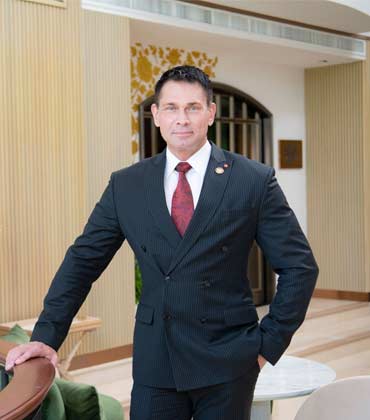 Dr. Alexey Tyutin, Managing director
For centuries, caviar has been associated with rarity, luxury and tradition. Today, however, the industry is undergoing a fundamental transformation. The future of caviar will depend not only on taste, egg size or exclusivity, but increasingly on how responsibly the product is produced.
The transition from wild sturgeon harvesting to aquaculture was the first major change. The next stage is to make caviar production more sustainable, transparent and technologically advanced while maintaining the quality consumers expect from one of the world's most prestigious foods.
Sustainability must begin with the fish
Traditional caviar production normally requires the fish to be killed in order to harvest its eggs. For an animal that may require many years to reach maturity, this creates an obvious sustainability challenge.
One of the most promising developments is the use of non-lethal egg extraction, where mature females can remain alive after harvesting and continue their natural production cycle. This changes the economics as well as the environmental profile of caviar farming.
At Thai Sturgeon Farm, we have spent years developing our production around this principle. Keeping valuable broodstock alive reduces the need for constant replacement and allows the producer to build long-term knowledge about individual fish, genetics, maturation and egg quality.
For the industry, sustainability should increasingly mean producing more value from fewer biological resources rather than simply increasing the number of fish.
Technology is becoming as important as tradition
Modern caviar production is increasingly a combination of aquaculture, biology, engineering and food science.
Recirculating Aquaculture Systems (RAS) allow producers to control water quality, temperature, oxygen and other critical parameters while significantly reducing dependence on natural water resources. For sturgeon farming in countries without a traditional cold-water environment, this technology creates entirely new possibilities.
Technology also enables greater consistency. Luxury customers expect the same quality every time, while chefs increasingly want products tailored to particular culinary applications.
This is opening another area of opportunity: closer collaboration between producers and chefs. Rather than treating caviar as a standardized commodity, producers can work with chefs on salinity, maturation, texture and other characteristics to create products for specific menus and dining experiences.
Traceability will become part of luxury
Consumers are changing as well.
A luxury product can no longer rely only on beautiful packaging and historical prestige. Increasingly, customers want to understand where a product came from, how it was produced and whether its environmental and ethical claims can be verified.
For caviar producers, this means that food safety certification, traceability, responsible farming practices and transparent production methods will become increasingly important competitive advantages.
In my view, the future definition of luxury will include not only scarcity but also confidence. A customer should be able to enjoy an exceptional product while knowing its origin and understanding how it was produced.
Local production can transform the supply chain
Another important development is the geographical expansion of sturgeon aquaculture.
Historically, caviar consumption and production were concentrated in a relatively small number of regions. Advanced aquaculture technology is changing this model.
-
The greatest opportunity for the caviar industry is therefore not simply to produce more caviar. It is to produce better caviar with greater responsibility.
Producing closer to emerging luxury markets can shorten supply chains, reduce the need for long-term storage and allow restaurants and retailers to receive fresher products more frequently. It can also reduce inventory risk and make producers more responsive to individual customers.
Asia is particularly interesting in this respect. The region combines rapidly developing luxury hospitality markets with world-class restaurants, international tourism and increasing consumer interest in premium food products.
The next generation of caviar
The greatest opportunity for the caviar industry is therefore not simply to produce more caviar.
It is to produce better caviar with greater responsibility.
The successful producers of the future will combine traditional understanding of sturgeon and caviar with aquaculture engineering, food science, traceability, sustainability and close relationships with chefs and consumers.
Caviar will always remain a luxury product. But luxury itself is evolving.
The next generation of consumers will increasingly expect exceptional taste, responsible production and a credible story behind the product. For our industry, meeting all three expectations is both the challenge and the opportunity ahead.
Fresh Caviar from Responsible Sturgeon Farming
Premium caviar purchasing is shaped by a narrow margin for error. Salt level can alter the eating experience while preservation choices affect freshness. Hospitality buyers may also need a product that fits a particular market rather than a generic global profile. A supplier that treats taste as fixed can therefore create a mismatch even when the roe itself is sound. Buyers should look for disciplined control over salting and preservation, paired with enough flexibility to match local preferences without masking the product with unnecessary additives.
Sustainability also carries more weight when it can be traced to the farming method rather than left as a label. Sturgeon production raises direct questions about fish welfare and water use. Buyers may also examine how farms manage the biological cycle behind roe quality. Non-lethal extraction changes that equation because the same fish can continue through later maturities, while recirculating aquaculture can reduce dependence on continual water replacement. For hospitality groups that want locally produced food with a lower environmental burden, farming practice becomes part of the sourcing decision rather than a separate corporate statement.
Food safety adds another layer. Premium positioning does not compensate for weak batch control or unclear handling between harvest and final packaging. Caviar buyers need documented hygiene procedures and traceability that can follow product back through storage and source records. Independent testing, recognized processing standards, source records and controlled packaging all matter because the product moves through several stages before reaching a restaurant or distributor. A credible producer should be able to show how those controls work in practice, not simply display certification names.
Consistency is harder to judge from a single tasting. Egg size and texture can change as fish mature, while temperature management before harvest can influence fat content and sensory quality. Reliable supply also depends on knowing where each fish sits in its cycle and preparing stock accordingly. For procurement teams, the stronger supplier is one that connects biological monitoring with production planning. That discipline supports repeatability without turning a premium food into an overprocessed one. Buyers comparing year-round supply claims should also examine whether fish records and production scheduling support the volumes being offered.
“Thai Sturgeon Farm’s caviar is produced without preservatives, with low salt levels that can be adjusted for larger orders.”
Commercial fit comes down to whether the producer can preserve those controls when orders vary. Private-label requirements and different salt preferences can affect the finished product, as can export packaging. Flexibility is useful only when the underlying production record remains intact. Buyers should therefore favor producers that can adapt the final presentation while keeping source identification and food-safety controls consistent from farm through dispatch.
Thai Sturgeon Farm merits consideration as a premier choice for buyers prioritizing sustainable caviar production. It uses non-lethal egg extraction and a recirculating aquaculture system, while fish are individually tracked and monitored through maturity cycles. Its caviar is produced without preservatives, with low salt levels that can be adjusted for larger orders. Thai Sturgeon Farm also links each packaged lot to source records and uses controlled glass-jar storage before final packing. International food-safety certifications and independent laboratory testing support that traceability. For buyers comparing premium caviar suppliers, its combination of animal preservation, controlled production, source traceability and food-safety oversight provides a practical basis for selection.
...Read more
Company :
Thai Sturgeon Farm
Management Dr. Alexey Tyutin, Managing director
Description
For centuries, caviar has been associated with rarity, luxury and tradition. Today, however, the industry is undergoing a fundamental transformation. The future of caviar will depend not only on taste, egg size or exclusivity, but increasingly on how responsibly the product is produced.